Hero

Churches and
heritage buildings

Spires, towers and listed fabric.

Get a quote

Our original trade

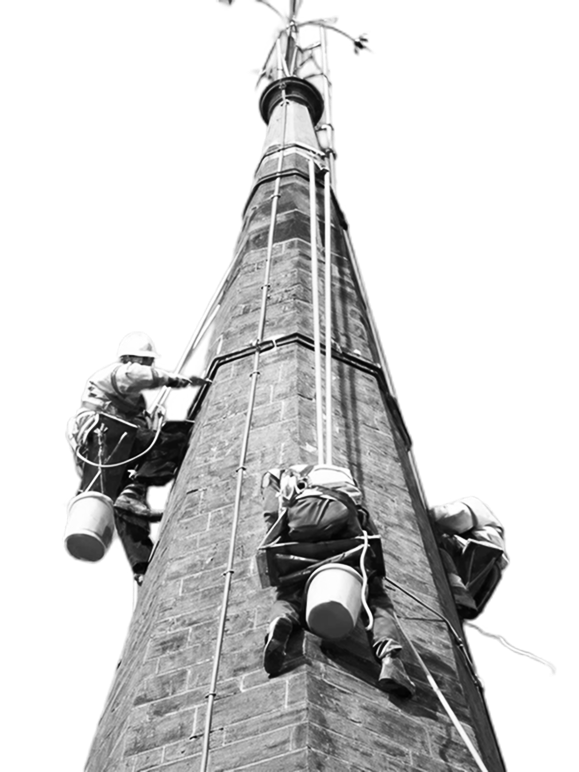
Braileys started life as E. G. Brailey Steeplejacks and Painting Contractors. Through the 1960s and 1970s the company was one of the country’s leading steeplejack businesses, working on industrial chimneys and church spires. Lightning protection came later, as the standards developed and heavy engineering in Britain declined.

That order of events is why heritage work is not a specialism we added. Getting a fitter safely onto a spire, and getting a conductor onto historic fabric without damaging it, is the problem this company was formed to solve. We have worked for English Heritage and for heritage bodies in Wales, and our engineers have worked at height on some of London’s best known structures.

Why heritage assesses differently

BS EN 62305-2 treats loss of cultural heritage as its own category of loss, alongside loss of life, loss of service and economic loss. A parish church is not a large building, but what it contains cannot be replaced, and that pushes the assessment towards protection more readily than floor area would.

Church towers and spires are also usually the tallest isolated structure for some distance, which raises the likelihood of a strike before you consider anything inside.

Get a risk assessment

Working on listed fabric

The design constraint on a listed building is that the system has to comply with the standard and be close to invisible. Those two things pull against each other, and resolving them is the skill.

In practice that means fixing into mortar joints rather than dressed stone, routing conductors down existing vertical lines such as buttresses and downpipe runs, choosing materials that weather without staining the stone beneath, and settling the route with the conservation officer or the diocese before consent is sought rather than after.

What we watch for

  • Bell frames and clock mechanisms that need bonding into the system.
  • Lead roofs and rainwater goods, which are metallic and have to be considered rather than ignored.
  • Earlier systems installed to BS 6651 or before, often partly removed during past repairs.
  • Repair work by other trades that cuts a conductor and does not record it.
  • Test clamps buried during previous re-pointing.
  • Consent conditions that dictate fixing types.

Common questions

Do churches need lightning protection?

Many do, and they reach that conclusion more readily than their size suggests. BS EN 62305-2 counts loss of cultural heritage as a category of loss in its own right, and a church tower or spire is usually the tallest isolated structure in its immediate area. Church insurers commonly expect protection to be in place and tested.

Will a lightning conductor damage the stonework?

It should not, and avoiding that is most of the design work. Fixings are placed into mortar joints rather than through dressed stone wherever possible, conductor routes follow existing vertical lines so the eye does not pick them out, and materials are chosen so they weather rather than staining the fabric below.

Do we need consent to install lightning protection on a listed building?

Normally yes. Work to a listed building generally needs listed building consent, and a church in use for worship may go through the faculty jurisdiction or its denomination’s equivalent instead. We agree the conductor route and fixing details before consent is sought, because that route is the thing being approved.

Can you work on spires and towers without a full scaffold?

Usually. Braileys began as a steeplejack business and roped access to spires, towers and chimneys is our original trade. On a tall narrow structure a scaffold can cost more than the lightning protection system itself, so we select access to suit the structure.

How often should a church system be tested?

On the same eleven month cycle as any other system. Churches carry two extra risks worth watching: bell frames and clock mechanisms that need bonding, and repair work carried out by other trades that disturbs conductors without anyone recording it.

Church or listed?

Tell us what the building is and what has been asked of you, by an insurer, an architect or a diocese. Call 01892 667258.

Talk to Braileys
01892 667258